At NEXT.io NYC 2026, the panel “Where iGaming Innovation Goes From Here” was framed around the future of the industry, but much of its real value came from what it actually takes to build in emerging verticals when regulation, payments, and consumer understanding have not fully caught up.
Moderated by Katherine Baker, Partner at Nelson Mullins, the conversation featured Thomas Metzger, CEO of Lotto.com; Nick Gunn, SVP of Global Revenue at SEON; Jeff Laniado, Director of Sales at Optimove; and Dan Portnov, CLO at Splash Sports. Together, they outlined a reality many operators are now facing across gaming: innovation is moving quickly, but the systems that determine whether a product can scale are often moving much more slowly.
Baker opened by asking about the new categories emerging across the space, and the responses pointed to sweepstakes, prediction markets, skill gaming, and even the return of loot-box style mechanics. The panel made an interesting point, in gaming, whether a product succeeds is not just about demand or design, but also about classification. Whether something is viewed as gaming or non-gaming can shape its legal standing, its access to payments, and ultimately its ability to survive.
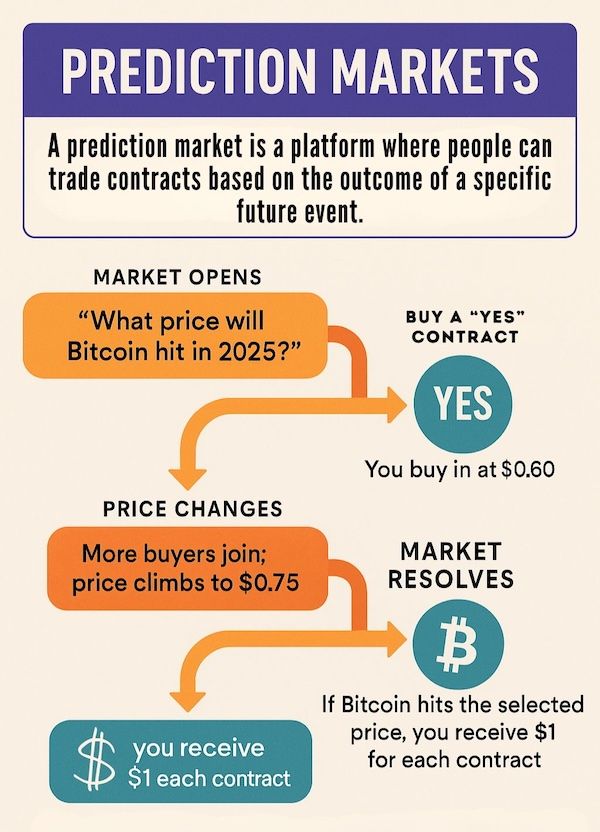
That point led into one of the most important operating realities discussed on the panel: payment processing. Gunn explained that payment processors are often ahead of regulators when it comes to risk decisions, and that if a company is placed into a gambling-related bucket, access to card rails can become restricted long before a state has taken a formal position. That is an important distinction because it shows how vulnerability in emerging verticals does not begin only with enforcement. A business can have consumer traction and strong demand, but if the infrastructure underneath it becomes unstable, growth becomes far more difficult.
Metzger’s comments on lottery couriers provided a strong example of how carefully companies in these categories have to navigate that environment. He explained that lottery couriers take customer orders for state lottery products and digitally get those tickets to customers, but that even describing the model requires care. The word is not “sell,” but “deliver,” a distinction he illustrated by saying it is like “Uber Eats without bikes and cars.” In a regulated industry, language is never just branding. The way a model is described can influence how it is interpreted by regulators and lawmakers.
He also pointed to the progress that has been made in states like New York, New Jersey, and Maine, where lottery courier licensing structures now exist in forms that resemble gaming licenses. In many other places, however, the more common model has been to operate off the back of a retail license. The larger takeaway was that when a category is new, businesses are often forced to help define the framework around themselves while they are still trying to grow inside it. That creates opportunity, but it also demands a level of patience and precision that many industries do not require in quite the same way.
That is why one of Metzger’s most practical points was that operators should engage decision-makers early rather than assume they can sort things out later. His broader message was to ask for permission before forgiveness and to make sure the case being made to the state is one that shows public value, not simply private upside. In lottery, that argument can be especially effective because proceeds are often tied to public education and other state benefits. Baker rightly noted that this gives lottery-adjacent businesses a somewhat privileged position, since not every emerging gaming product can make that case as clearly.

Another valuable thread throughout the discussion was how differently consumers view these products compared to the way the industry talks about them. Laniado noted that while casino and sports betting are fairly intuitive to most users, many adjacent categories still require explanation. Fantasy, DFS, sweepstakes, social casino, and predictions may be familiar terms within the business, but that does not mean the average consumer understands the distinctions between them. He pointed out that even active online bettors can be surprisingly misinformed about the products they are using.
Baker captured that disconnect well when she said consumers are “blissfully unaware” and that, in the end, they just want to play a game. That observation matters because it helps explain why launching into a new vertical is not simply a matter of repurposing an existing strategy. If the customer does not naturally understand the product, operators have to spend more time building demand, shaping perception, and educating users before the business can scale in a meaningful way.
That idea carried into one of the panel’s stronger business insights when Laniado called 2026 “the year of the pivot.” He said that nearly every client conversation he has now centers on the same question: what is the next line of business? That framing says a great deal about where the market is. The conversation is no longer limited to experimentation on the edges. Operators are actively looking for the next durable category, but those moves come with the realization that different sub-verticals attract different kinds of players, and those players do not respond in the same way to acquisition, promotion, or retention.
For that reason, Laniado emphasized that a CRM or growth strategy built for DFS cannot simply be dropped into predictions or another emerging category and expected to work. These are not product extensions. In many cases, they are entirely different customer environments, which means companies need to rebuild rather than recycle parts of their playbook. That is an important point because it reinforces how innovation in gaming is not only about launching something new, but also about understanding whether the rest of the business is actually equipped to support it.
Portnov added historical context that helped connect the present moment to what may come next. He pointed back to the daily fantasy sports boom of 2015, when rapid growth and controversy, including insider information concerns, drew enough attention to trigger crackdowns in New York and elsewhere before more formal frameworks eventually took shape. His point was not just that the industry has seen this kind of cycle before, but that visibility itself often accelerates scrutiny. Once an emerging category becomes large or loud enough, enforcement tends to follow.
That lens makes current debates around predictions, skill gaming, and similar products easier to understand. Portnov noted that even in lottery, something as positive as an operator celebrating an $83 million win can end up leading to litigation rather than goodwill. It was one of the more striking moments in the conversation because it showed how quickly success in gaming can become a legal flashpoint. At the same time, the longer-term view was not entirely pessimistic. Proper licensing and regulation often arrive only after a category has first gone through that period of pressure and uncertainty.
By that point, the conversation had naturally shifted from the immediate difficulties of operating in emerging verticals to the broader question of what those difficulties are ultimately leading toward. One of the clearest answers was that operators should build as though regulation is inevitable, even if it has not fully arrived yet. Gunn argued that companies in gray areas should already have geolocation, AML controls, and responsible gaming measures in place, because the goal should be to reduce scrutiny before it begins rather than scramble once it arrives. Metzger reinforced that same idea in simpler terms by stressing the importance of self-regulation and taking care of customers, both of which are especially important in categories that are still shaping how they will be perceived by regulators and the public.
The final section of the panel turned more directly to what the next version of the market might look like, and Portnov said he expects more all-in-one apps where traditional sportsbooks bring in skill gaming, predictions, and adjacent products in order to keep users engaged within a single platform. That was one of the more interesting forward-looking ideas of the discussion because it suggested that the future may not be about isolated verticals competing side by side, but about increasingly blended ecosystems with shared wallets, unified controls, and a broader mix of experiences under one roof.
That possibility also tied the conversation together. Much of the first half of the panel focused on classification, payments, compliance, and education because those are the obstacles that determine whether emerging products can survive. The latter half looked toward convergence because once those challenges are managed, the next question becomes how these products coexist and reinforce one another within the same consumer environment.
Baker closed with a question that captured both the uncertainty and the significance of the moment: three years from now, will sports predictions be regulated as gaming in more than five states? The responses were split. Metzger first joked, “Who’s the president?” before pointing to the long history of gambling being carved out at the state level. Gunn suggested the answer might be yes in the shorter term and no over a longer horizon, depending on how state and federal interests align. Laniado said yes, arguing that three years is a long time in an industry that moves this quickly, while Portnov said no.
That lack of consensus was fitting because the panel was less about certainty than about transition. The most interesting takeaway was not simply that new products are coming, but that the future of iGaming will likely be shaped by the companies that understand how to operate responsibly in the gray before the rules are fully settled. Creativity still matters, but in this environment it is only part of the equation. The businesses best positioned for what comes next may be the ones that understand classification, prepare for scrutiny early, educate consumers clearly, and build as though today’s edge case could become tomorrow’s regulated category.
