Cameron Indoor used to be the place Duke went to fix itself. Bad shooting night, sloppy start, double-digit deficit, didn't matter. The building would get loud, the Crazies would get involved, and the other team would eventually crack. That's not a vibe anymore. That's a streak that's over, and the way it ended says more about this Duke team than the final score does.
Illinois walked into Durham Tuesday night, ended a 35-game home winning streak, the longest active run in the country, and did it by 21. Andrej Stojakovic put up 47 points by himself, the most any road player has ever scored in Cameron Indoor, and that stat alone should embarrass a Duke defense that's supposed to have the size and talent to prevent exactly that kind of night. But the box score detail that actually explains what happened is the rebounding margin. Illinois won the glass by 20. That's not a shooting slump or a bad bounce. That's a choice, made possession after possession, by a team that didn't want it as much as the other one.
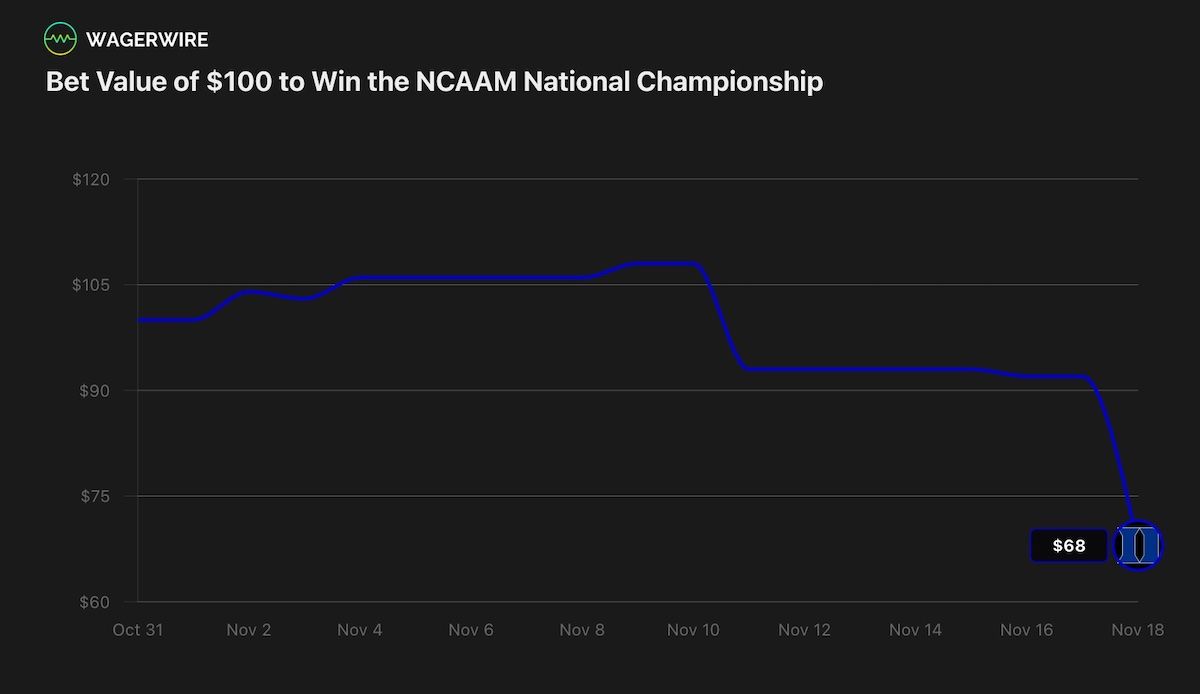
Scheyer's "soft" comment was an indictment of effort, not scheme
Jon Scheyer didn't hide after the game, and he didn't reach for the usual coach-speak about execution or late-season film work. He called his own team soft, specifically pointing to the rebounding and paint numbers as the evidence. "We're bigger than they are," he said. "We gave up 20 more points. 20 more rebounds. That's going to be addressed."
That's a coach describing a competitive failure, not a talent gap. Duke has the size. Scheyer said so himself. What they didn't have Tuesday was the will to use it, and that's a far scarier problem five games into a season than a shooting slump or a lineup that hasn't gelled yet.
Duke doesn't have that guy anymore, and it shows
For two straight years, Duke could paper over nights like this because it had a singular talent who refused to let the game slip away. Cooper Flagg did it last year. Cameron Boozer's brother Cayden aside, it was Boozer's twin who gave Duke that same gravitational pull the year before as a generational prospect anchoring everything the roster did. When the effort wavered or the shooting went cold, those guys were the answer. They made winning ugly or close instead of letting it get away by 21.
This year's roster doesn't have that player, and it's not clear it has anyone pretending to be. That doesn't mean the talent gap is enormous. It means there's no longer a safety net for the exact kind of lazy, low-effort stretch that got exposed against Illinois. A top-five prospect bails a team out of a bad rebounding night. A team without one just loses by 21, and that's precisely what happened.
A 3-2 start was supposed to be the floor, not a warning sign
Duke came into this season with the kind of margin for error that lets a team play poorly and still win, mostly because that's exactly what Cameron Indoor and a run of elite talent have provided for years. That margin is thinner now, on both counts. A team playing like it's entitled to wins because of the jersey is going to keep losing until something forces a correction, and the schedule isn't offering any favors to delay that reckoning.
Washington State comes to Durham Saturday, then it's back-to-back games against UConn and Florida. If Duke's effort problem is still unresolved by the time Florida leaves town, 3-2 won't look like a blip anymore, and the absenc
e of a star to bail them out will be the story of the whole season, not just one bad Tuesday.
It's November, so panic is premature. But effort isn't a talent problem, and Duke has no excuse for being outworked by 20 rebounds in its own building and giving up 46 points to Andrej Stojakovic. Without a Flagg or a Boozer to erase the bad nights, Scheyer's team has to actually become disciplined instead of just talented. That's the number he has to fix before any of the rest of it matters.
