Brief History of Prediction Markets + Current Landscape
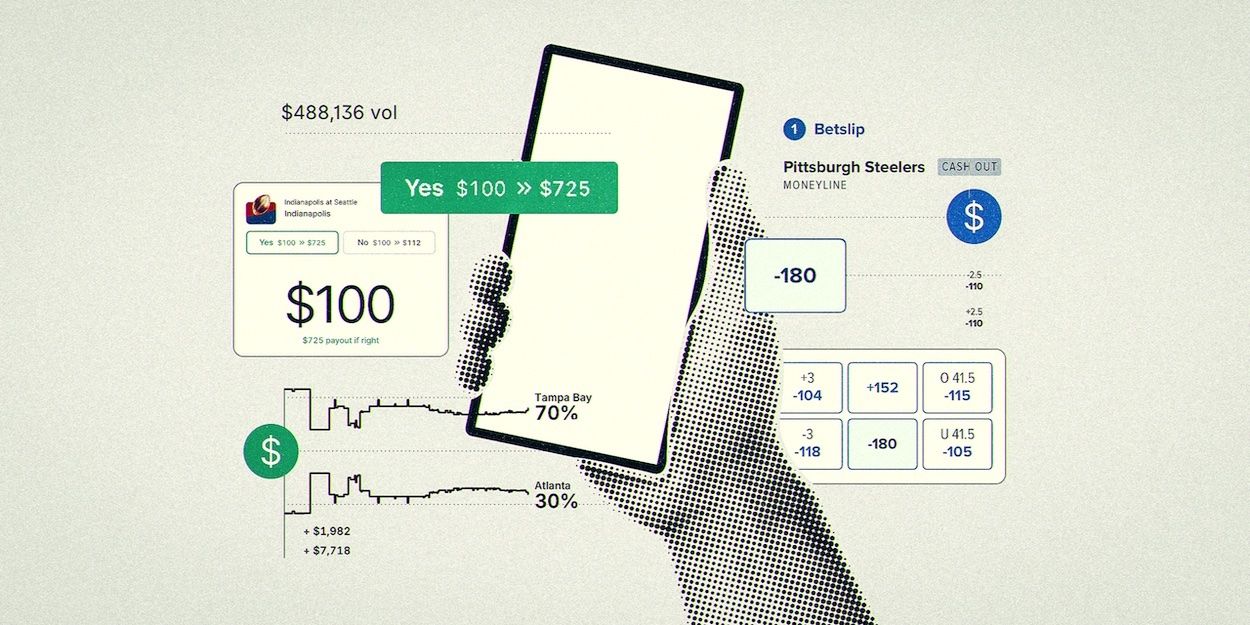
Prediction markets have existed for decades, with early examples dating back to political election forecasting in the late 19th century. Modern prediction markets have expanded well beyond politics into sports, economics, entertainment, and world events. You can practically gamble on anything through the prediction markets. The industry has experienced explosive growth over the past few years, driven by regulated platforms like Kalshi in the U.S. and decentralized platforms such as Polymarket. Billions of dollars are now traded annually, and prediction markets are increasingly viewed as both forecasting tools and investment products.
The Underlying Marketplace Infrastructure
Unlike a traditional Sportsbook, prediction markets operate as an exchange. Buyers and sellers trade contracts directly with one another, while the platform simply facilitates the transaction. Liquidity is provided by market makers, who continuously post buy and sell prices to ensure users can enter and exit positions efficiently. The platform itself does not determine prices; the market participants do.
Breakdown of Prediction Market Pricing Mechanism (0¢–$1) vs. Sportsbook Pricing Mechanism (Odds + Juice)
Prediction market contracts trade between $0.00 and $1.00, representing the market's implied probability of an event occurring. For example, if a contract trades at $0.70, the market is assigning roughly a 70% chance of that outcome happening. If the event occurs, the contract settles at $1; if not, it settles at $0.
Sportsbooks instead use betting odds (e.g., -150, +200) that include built-in vig (juice). These odds determine payouts while also giving the Sportsbook a mathematical edge.
How Prediction Market Participants (Makers, Takers) Generate Revenue
Market participants profit by trading contracts. Market makers earn money by providing liquidity and capturing the spread between buy and sell prices while facilitating trading. Market takers generate returns by purchasing contracts they believe are undervalued or selling contracts they believe are overvalued before prices move or the market settles.
How Prediction Market Operators Generate Revenue (Trading Fees) vs. Sportsbooks (Vig + Positional Risk)
Prediction market operators primarily earn revenue through transaction and trading fees charged when users buy and sell contracts. Because they function as exchanges, they generally do not take positions on outcomes, reducing their financial risk.
Sportsbooks, by contrast, generate revenue through the vig (juice) built into betting odds and often assume positional risk by accepting wagers directly from customers. While Sportsbooks manage exposure by adjusting odds and balancing action, they can still lose money if outcomes heavily favor bettors.
Conclusion
Prediction markets and Sportsbooks both allow users to speculate on future events, but they operate under fundamentally different business models. Prediction markets rely on an exchange-based system where users trade against each other, and prices reflect collective probabilities, while Sportsbooks set odds, collect vig, and frequently take the opposite side of customer wagers. The future of prediction markets looks incredibly promising, with many viewing them as an industry that could eventually outgrow the traditional Sportsbook model.