Twenty-five teams in World Series history have taken a 3-0 lead. All twenty-five won it all, and twenty-one of them never let it go to a Game 6. Those numbers tell you the Brewers are about to win their first championship, but they don't tell you why, and the why is the more interesting story. Milwaukee doesn't beat you with a three-run bomb in the ninth. It beats you by refusing to make the third out.
That's not a stylistic quirk. It's the entire organizational identity, and Game 3 was the cleanest distillation of it anyone could ask for. Eight runs in the fifth inning, a World Series record, built entirely on contact: seven straight hits with two outs already on the board, another postseason record, and not a single home run anywhere in a 10-1 win. The Brewers have now outscored the Rays 18-7 across three games while hitting one homer total. For a sport that spent a decade worshiping exit velocity, that's close to subversive.
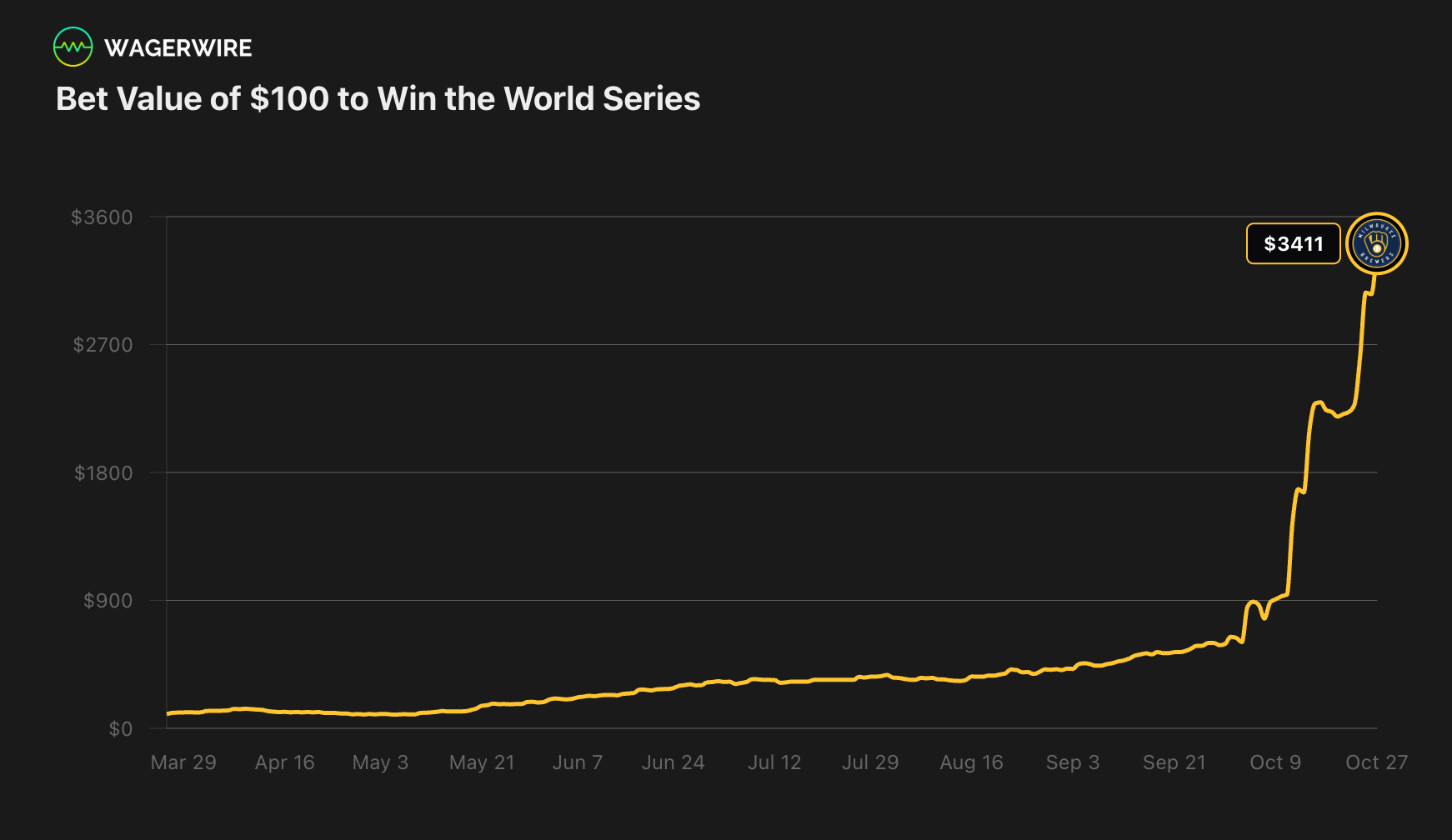
The two-out rally is a repeatable skill, not a hot streak
Baseball people love to call a big inning "lightning in a bottle," as if the sequence couldn't be reconstructed if you tried. The Brewers make the case otherwise. A team that wins 103 games in the regular season and opens the playoffs 10-1 isn't catching lucky bounces for six months. It's executing a plan: work counts, put the ball in play, make the pitcher survive the two-out jam a dozen times a night. Brice Turang's two-run single that ticked off a diving shortstop's glove was the spark, but the Brewers followed it with six more hits in a row because that's the approach on every pitch, not just the opportune ones. When a lineup treats two outs as a beginning instead of an ending, length of rally stops being random.
A rookie lefty is quietly having a historic October
The offense is getting the headlines, understandably, but Robert Gasser's start deserves its own marquee. Six shutout innings, one hit allowed, a postseason ERA now sitting at 0.60 across 15 innings. He faced the minimum, meaning the only baserunner he allowed got erased before doing any damage, and he's the first left-hander to pull that off through at least six innings of a World Series game since Sandy Koufax in 1965. That comparison isn't a hitting coach's hype; it's just the record. A rookie matching that specific company, in this specific setting, is the kind of detail that gets buried under an eight-run inning but shouldn't be.
Nobody in that clubhouse is allowed to admit what everyone else already knows
The Brewers' refusal to acknowledge the math is itself a tell. Every quote out of that clubhouse was some version of "three wins isn't four," and that discipline is exactly how a team avoids becoming the first one in 122 World Series to blow a 3-0 lead. It's also good theater, because the Rays know it too. Tampa Bay's own third baseman essentially conceded the obvious: they're trying, but the other team is simply playing better and the bounces are going their way. When a team stops pretending the gap is closable, the series is already over in spirit if not on paper.
Milwaukee doesn't need a signature swing to finish this. It needs the same ugly, relentless at-bats that got it here, the kind that turn two strikes into a rally instead of an out. History says that formula closes out champions. The Brewers, fittingly, are the only ones in the building acting like it hasn't happened yet.
