Nobody builds a championship roster by losing 121 games. That's the modern record for futility, set in 2024, and it was supposed to be the bottom of something ugly, not the foundation of anything. Instead the White Sox are two wins from the ALCS, sitting on a 2-0 lead over Cleveland after a 4-3 road win, and they've done the entire thing without playing a single home playoff game yet. Four games into October, they're 4-0, all on the road, and the team that lost 100 or more games three years running is now one of four clubs left standing.
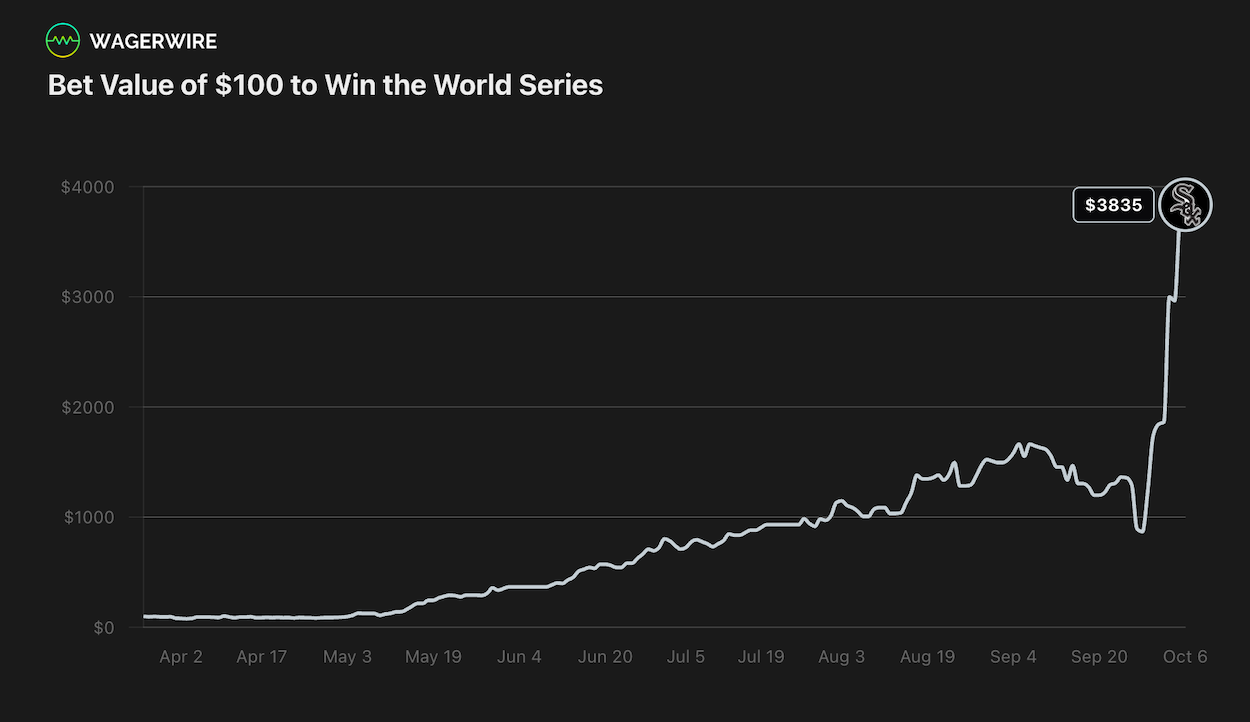
That context matters more than the final score Monday night. This isn't a juggernaut steamrolling a tired division rival. It's a roster that got torn down to the studs rebuilding its identity in real time, in the highest-leverage games of the year, against a Cleveland team that out-talents them on paper in several spots. In fact, a $100 bet placed on the White Sox to win the World Series at the start of the season is now worth $3,835.
Sean Burke's relief outing was the actual story, not the comeback
Braden Montgomery's go-ahead double will get the highlight treatment, and fairly, since a first-pitch fastball turned into the biggest swing of the game. But the version of this win that should scare Cleveland is Sean Burke coming out of the bullpen behind an opener and throwing 5⅓ innings of one-hit ball, retiring 13 straight at one point, striking out six on 83 pitches. That's not a matchup gimmick working out. That's a pitcher imposing himself on a lineup in a win-or-go-home atmosphere.
Chicago has now leaned on unconventional pitching usage all series, opener-into-bulk-reliever, and it's working because the arms are executing, not because the plan is especially exotic. Grant Taylor closing it out for his second straight save, even after allowing Jo Adell's RBI triple, is the same story: a bullpen doing more with less name recognition than anyone expected in April.
Cleveland's offense has gone cold at the worst possible time
Gavin Williams was genuinely excellent, striking out 11, tying for second-most by a Cleveland pitcher in postseason history, and becoming the first Guardians pitcher to strike out five straight batters in a playoff game. None of it mattered because his lineup managed next to nothing behind him for the second consecutive game. Manager Stephen Vogt pointed to a team that's weathered similar offensive droughts all year and bounced back, and that history is real. But history doesn't buy outs in an elimination game.
The frustrating part for Cleveland is how close it was. A two-run first inning, an error on a potential inning-ending play at first base that let a second run score, chances that didn't convert late. This wasn't a lineup getting dominated from pitch one. It was a lineup that let a winnable game slip through specific, identifiable cracks.
Home-field history is actually in play now
Chicago hasn't closed out a postseason series at home since 1906. That's not a stat, it's practically a different sport's worth of baseball ago. Game 3 Wednesday at Guaranteed Rate Field gives them two cracks at erasing that, and a fan base that sat through three straight 100-loss seasons gets to watch a potential series-clincher in person for the first time in generations.
The symmetry of it, a team built out of historic losing trying to end a 119-year home drought, is the kind of thing that writes itself. Whether Chicago actually finishes the job at home or needs to go back on the road again, the larger point already stands: a rebuild that bottomed out in spectacular fashion is four wins from the ALCS, and nobody outside their own clubhouse saw it coming this fast.
