Weather isn’t just a backdrop in NFL games it’s a game changer. From wind gusts to snow flurries, environmental conditions can dramatically alter player performance, play-calling, and ultimately the betting board. Ignoring the forecast can mean leaving real value on the table.
The “Invisible 12th Man”
Rain, wind, heat, and snow all act as an invisible 12th man, changing how teams play. When heavy rain or wind hits, passing accuracy drops, kicking becomes unreliable, and slippery turf leads to fumbles and missed tackles. Coaches pivot to shorter passes, heavier rushing, and safer special teams calls.
These subtle shifts ripple across player stats, possession time, and total scoring. Some teams, often those built around a power run game or experienced in rough climates, are naturally better equipped to thrive. Sportsbooks recognize this and quickly bake it into their lines. Smart bettors should, too.
How Weather Moves the Lines
Bookmakers factor forecasts into opening lines. If conditions change, so do the odds, especially for totals, props, and kicking markets. A late rainstorm or wind advisory can trigger sharp movement just hours before kickoff.
To find value, monitor how different books react to weather updates. Tracking these shifts can help identify mismatched odds or totals that haven’t yet caught up to the latest forecast.
Key Weather Factors That Influence NFL Games
Rain
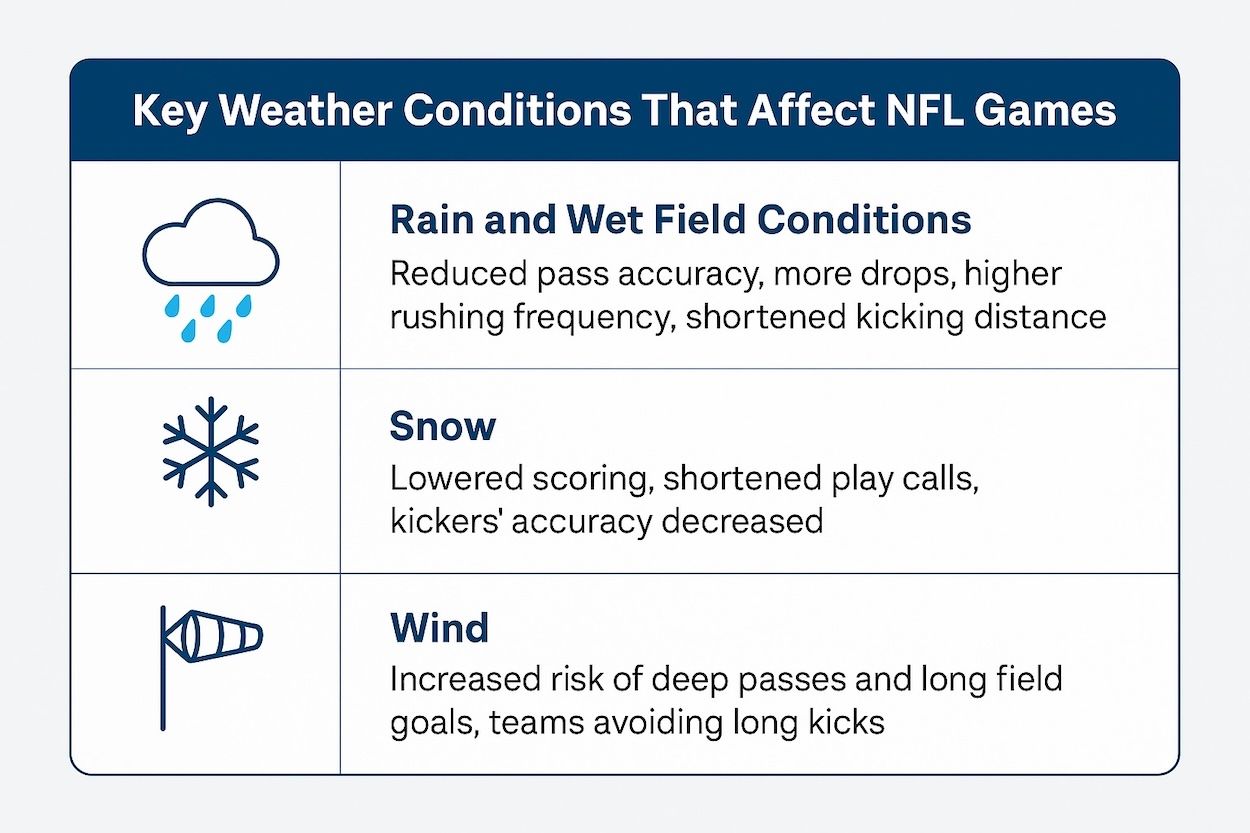
Rain makes ball control a nightmare. Completion rates and field-goal accuracy both dip. Fumbles spike, and deep passes are replaced with ground-and-pound playbooks. Coaches often go for it on fourth down rather than risk long kicks, and totals tend to drop, a setup that often favors the under. Look for running backs with secure ball handling and receivers who can make contested catches on slick turf.
Snow
Snowstorms are the most disruptive weather condition in football. Heavy snow cuts visibility, footing, and passing efficiency. Historically, games in blizzard conditions score about 25% fewer points.
Teams simplify their play-calling and run more frequently. However, quarterbacks with strong arms and quick reads can exploit slowed defenses. Home teams familiar with snowy conditions usually gain an edge.
Wind
Wind affects both passing and kicking more than any other element. At 15–20 mph, kick accuracy drops, deep throws wobble, and playbooks shrink.
Expect shorter throws, fewer field-goal attempts, and totals leaning under. Rushing props and yards-per-carry markets become more attractive when the air game is neutralized.
Heat and Humidity
Extreme heat drains players fast. Games played above 85°F (or below 25°F) show an 8% decline in scoring.
Early drives may look sharp, but fatigue sets in by the second half. Visiting teams from cooler climates are hit hardest.
Domes vs. Outdoor Stadiums
Ten NFL teams currently play indoors, minimizing weather’s effect. Indoor games typically produce cleaner passes, more consistent kicking, and higher totals. But indoor teams can struggle when forced outside in harsh conditions, something oddsmakers adjust for. Always check whether a retractable roof will be open or closed before kickoff.
When Weather Changed NFL History
Weather has rewritten the script of some of the league’s most memorable games:
- The 1967 “Ice Bowl” between the Packers and Cowboys remains legendary, temperatures plunged to −48°F, wrecking footing and execution, and warping late betting lines.
- The 2010 Eagles-Vikings matchup was delayed two days due to a blizzard, the first Tuesday NFL game in 64 years.
- Buffalo’s 2024 playoff game was pushed back a full day as a snowstorm buried Highmark Stadium.
Each case caused major shifts in spreads and totals as sportsbooks scrambled to recalculate risk.
Using Weather Data to Sharpen Your Betting Edge
Watch Forecasts and Line Movement
Study stadium specific forecasts, temperature, precipitation, and especially wind direction. Late changes can create soft lines before books react. Sites like AccuWeather, Windy, or Sportradar provide hourly data that sharp bettors can leverage.
Totals vs. Spreads
Severe weather usually depresses totals more than spreads. Strong winds or steady rain favor unders and boost value on rushing props. In contrast, early-game scoring may rise in hot, humid matchups before fatigue slows offenses,a setup for first-quarter or first-half wagers.
Player Props
Avoid passing or kicking props in poor weather. Focus on rushing attempts, yards-after-contact, or goal-line carries. Study how individual players perform historically in similar conditions to find hidden prop value.
Tools for Weather-Based Betting
- National Weather Service / AccuWeather — Stadium-level forecasts and real-time radar.
- Windy & Windy.app — Visual wind maps and gust projections.
- Action Network Weather Dashboard — Sports-specific data tied to betting lines.
- Sportsbooks like FanDuel or DraftKings — Live odds that adjust dynamically to weather changes.
- Local beat reporters and social media — Game-day insights on field conditions or last-minute roof decisions.
Record how weather impacts your past bets — over time, you’ll develop a sharper read for when the forecast truly matters.
Common Misconceptions
“Snow Always Means the Under”
Not necessarily. Snow makes kicking and passing harder but doesn’t always kill scoring. Power-run teams or bad defenses can still push totals over. Always cross-check the forecast and offensive profiles.
“Overreacting to Forecast Hype”
Social media often exaggerates bad weather. Markets only move when forecasts stabilize and liability shifts. Don’t bet blind, compare line movement and real hourly updates before locking in.
Final Word: Forecast the Field, Not Just the Teams
Weather won’t decide every NFL bet, but it’s one of the most consistent external factors you can quantify. Rain narrows playbooks. Wind kills kicks. Snow slows games. Heat drains defenses.
The bettors who treat the forecast like a data point, not an afterthought, are the ones who consistently find the hidden value others miss.
